LOMBOK, INDONESIA – “What countries are safest for women travellers?” This is a phrase that countless adventurous women have googled over the years, and that myself I searched for recently while considering new travel destinations. As a frequent solo traveller, safety is a top consideration when it comes to having a good time when seeing new places and meeting new people. So when I entered this phrase into my search engine, I was surprised to find that the answers I got offended me. Most of the lists that I saw were entirely Euro-centric, recommending places like the United Kingdom, Germany, Italy, France, and sometimes the United States or Canada.
Reading these lists really bothered me, because they reinforce the idea that only countries populated by primarily white bodies can be “safe.” This ideology plays into many people’s fear of the other, and of different cultures and ways of living. To advertise primarily western countries as safe, and conversely to not advertise visiting cultures composed primarily of black and brown bodies is frankly irresponsible. The idea that women can only be safe when visiting Western European and North American cultures is simply wrong.
I come from the Canadian province with the highest rate of intimate partner violence, and the city with the highest violent crime rate. The fact is that many Canadian women would be safer travelling abroad than in their own homes. So I don’t buy into the fear that many of my fellow North Americans have about traveling abroad to visit countries where people look different from themselves.
Here’s the thing. When you’re a woman or non-binary person, every stranger can feel like a potential threat. However, moving through the world with an increased fear of other people and cultures does nothing to make us feel or be safer. One of the biggest benefits of travel is to expose ourselves to others and increase our knowledge and understanding of people who are different than us.
So, here is my list of five countries where I have personally travelled, where I felt overall very safe as a woman traveller. I recommend that you check them out on your next trip, and I invite you to share your own recommendations in the comments below.
#1 Nepal
Nepal has the honour of being the second-most peaceful nation in South Asia, after the small and isolated nation of Bhutan. Nepal is one of the world’s poorest countries, and their economy is heavily dependent on foreign aid and tourism. As a historically contentious region between India and China, Nepal has seen its share of strife and political turmoil, including an influx of refugees from Tibet which has has a huge influence on the population and culture.
As a solo traveller, I found Nepal has a very calm and peaceful feeling. There are plenty of women on the streets working and going about their daily lives, which I found a stark contrast to my travels in India where the gender balance of people on the streets skewed vastly the other direction. I met lots of other solo female travellers, who participated in all kinds of tours including women-only treks to Everest Base Camp and other trekking destinations.
Did you know? Nepal has had Bidhya Devi Bhandari as their first female president since 2015, making them more progressive in that sense than many other western nations who have yet to have female heads of state.


#2 Romania
Eastern European countries seem to get passed over on the safe travel lists in favour of their western counterparts. Romania may best be known as the land of Dracula’s Transylvania, but it is a country home to historic medieval villages, breathtaking mountain ranges, and a sandy coast that borders the Black Sea. Although they now rank #24 on the Global Peace Index scale (2018), this country has a history of genocide and persecution of Jewish peoples during WWII that is often forgotten in the face of better-known areas like Poland and Germany, as well as a strict communist regime that is still in living memory. It’s important to note that the Roma people still face persecution on ethnic grounds, and are considered one of the most hated ethnic groups in Europe.
I recently travelled Romania with a friend on a road trip through most of the country and we had a fabulous time both admiring the gorgeous countryside and learning about the history of communist Romania and its recent move to a democratic state. Romania is one of those places that really has it all: beautiful mountains, rolling pastoral hills and farmland filled with blooming sunflowers, and coastal beaches where you can sunbathe topless to your heart’s content. It also has the honour of being the most affordable place I have travelled in Europe thanks to a network of cheap business hotels and B&Bs, as well as delicious and cheap local food and wine.
Did you know? The term “gypsy” to refer to people who are free-spirited or lead a nomadic existence has fallen out of popular use due to its history of being used an ethnic slur against the Roma people. If you haven’t already, it’s time to cut the word “gypsy” from your vocabulary!
#3 Brunei
Brunei is a little-known but wealthy nation on the northern coast of the isle of Borneo. It has the second-highest Human Development Index score in Southeast Asia, after Singapore, and is considered the fifth richest country in the world. Brunei is a predominantly Muslim state, with only about 20% of the population identifying as non-Muslim, and has recently come under criticism for a move to implement more strict Sharia law practices.
When I visited Brunei solo earlier this year, I noticed that there were barely any tourists around, and indeed most people seemed confused as to what this white girl was doing wandering around ordering the occasional nasi ayam (chicken rice). However, people were very nice and helpful, making sure I was well-fed and headed in the right direction. The Islamic architecture in Bander Seri Begawan is stunning, and visiting the unique state mosques was an experience unlike any other I have had in Asia.
There are very strict gender norms in Brunei, and indeed I barely spoke to any men while I was there. Most shops, transport, restaurants, and services will have both a man and a woman working, and each will deal with customers of their own gender. It is not usual to touch anyone of the opposite gender, including shaking hands. To be honest, I really enjoyed only dealing mostly with women for a few days and knowing no men would casually touch me. The sale of alcohol is banned in Brunei, and it actually gave me a lot of comfort to know that while walking the streets at night I wouldn’t be confronted by any groups of drunk men looking for trouble. The lack of alcohol has led to the development of a lovely coffeehouse night culture, with good coffee, food, and live music being easy to find each evening.
It is worth noting that the rule of law in Brunei is very strict. Do not use or carry drugs, steal anything, or break any laws. It is also not considered a safe place for queer travellers due to persecution of homosexuality under state law. Women should dress conservatively, with arms and legs covered, although a head covering is not required for visitors.
Did you know? Brunei’s Muslim women wear a headscarf called a tudong. Elsewhere this headscarf is known as a hijab, and by other names depending on style and culture.


#4 Indonesia
Indonesia is a large and incredibly diverse country, including more than 1300 islands and hundreds of ethnic and linguistic groups. The cultures on these islands are historically very patriarchal, and there is some conflict around local ethnic and gender lines. Although there are some safety concerns for certain parts of the country, islands like Bali and Lombok are backpacker and solo traveller paradises. Bali is a predominantly Hindu culture, and Lombok is predominantly Muslim.
Having travelled these islands both solo and with friends, I was struck by how friendly the local people are, and how much there is to do. The coastal areas offer beaches, spas, and relaxation. Central areas are cultural and arts-focused. Islands are perfect for snorkeling, scuba diving, and surfing to your heart’s content. Almost everywhere there are cooking, yoga, and art classes, and lots of short hiking trips to waterfalls and other geological features. It is easy to meet people and make friends with both locals and other travellers.
Did you know? Grassroots women’s and human rights groups are thriving in Indonesia, despite attacks by religious groups and police raids. Although the struggles Indonesian women face are similar to women’s issues around the world, the intersection of religion and women’s rights is important to Indonesian feminism, and this often leads to different approaches to change than in western feminism.
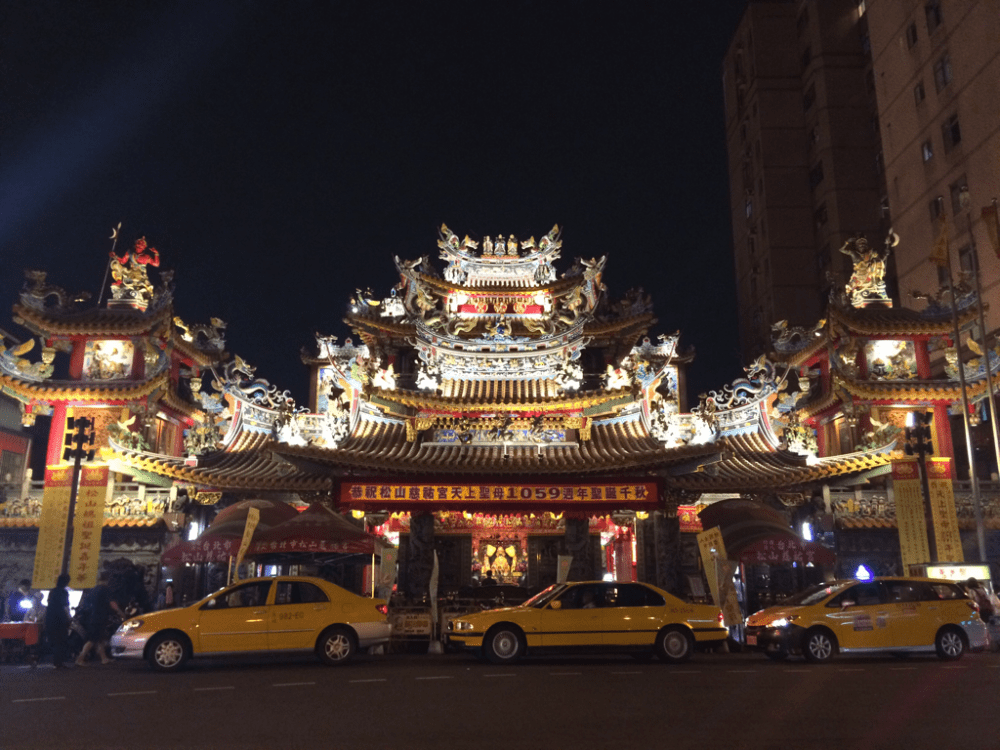
#5 Taiwan
Taiwan unexpectedly became one of my favourite places in Asia when I made a last-minute decision to spent a week there. Taiwan maintains a complicated relationship with mainland China, who claim sovereignty over the nation, and their political history has been fraught with conflict. Taiwan may be best known in North America as the purveyors of cheaply manufactured goods (“made in Taiwan”) however Taiwan boasts incredibly modern cities, a distinct ancient culture, biologically unique flora and fauna, and a strong night market culture unlike anywhere else in Asia.
When I went to Taiwan I first and foremost fell in love with the food: dumplings, roasted duck, squid, and soups. Although a lot of people in Taipei speak English, many don’t, and I did a lot of pointing at what other people were eating and ordering “one of that.” I was never disappointed, and always pleasantly surprised. It’s an adventurous foodie’s dream! I was also impressed with the excellent public transit in Taipei, which made getting around cheap and safe for when you’re out and about the many market areas each night.
Did you know? In 2016, Tsai Ing-wen was elected as the first female president of Taiwan. She is also Taiwan’s first president of Hakka and aboriginal descent, as well as the first elected unmarried president. Taiwan joins Nepal on the list of countries with a woman head of state.
There are many things you can do to stay safe(r) when travelling abroad, but only travelling in Europe and North America is not one of them. Get out there and explore the world!
***Author Note 1: Why do I use the terms “safer/safe(r)” instead of “safe”? I believe that the idea of someplace being “safe” or “unsafe” is fundamentally flawed. Almost anywhere can be safe and almost anywhere can be dangerous depending on your circumstances, so I use the terms “safer/safe(r)” to indicate that choice and chance play a role in our experiences.
***Author Note 2: I am a white, cisgendered, settler-Canadian whose home is on Treaty 6 territory. I am always looking to improve my analysis on issues of race, culture, gender, and travel. If you have any feedback on my writing or ideas, I invite you to please message me from my “Contact” page form!
 The Travel Binder